Finding an AI automation consultancy that delivers measurable savings and real control in customer service often wastes weeks and budgets. Most firms rely on generic templates or hide pricing tiers, which leaves owners guessing about fit and real-world deployment. This ranking shows which agencies match your business complexity and budget so you can choose without gambling on generic consulting claims.
Table of Contents
Tysonkaye
At a Glance
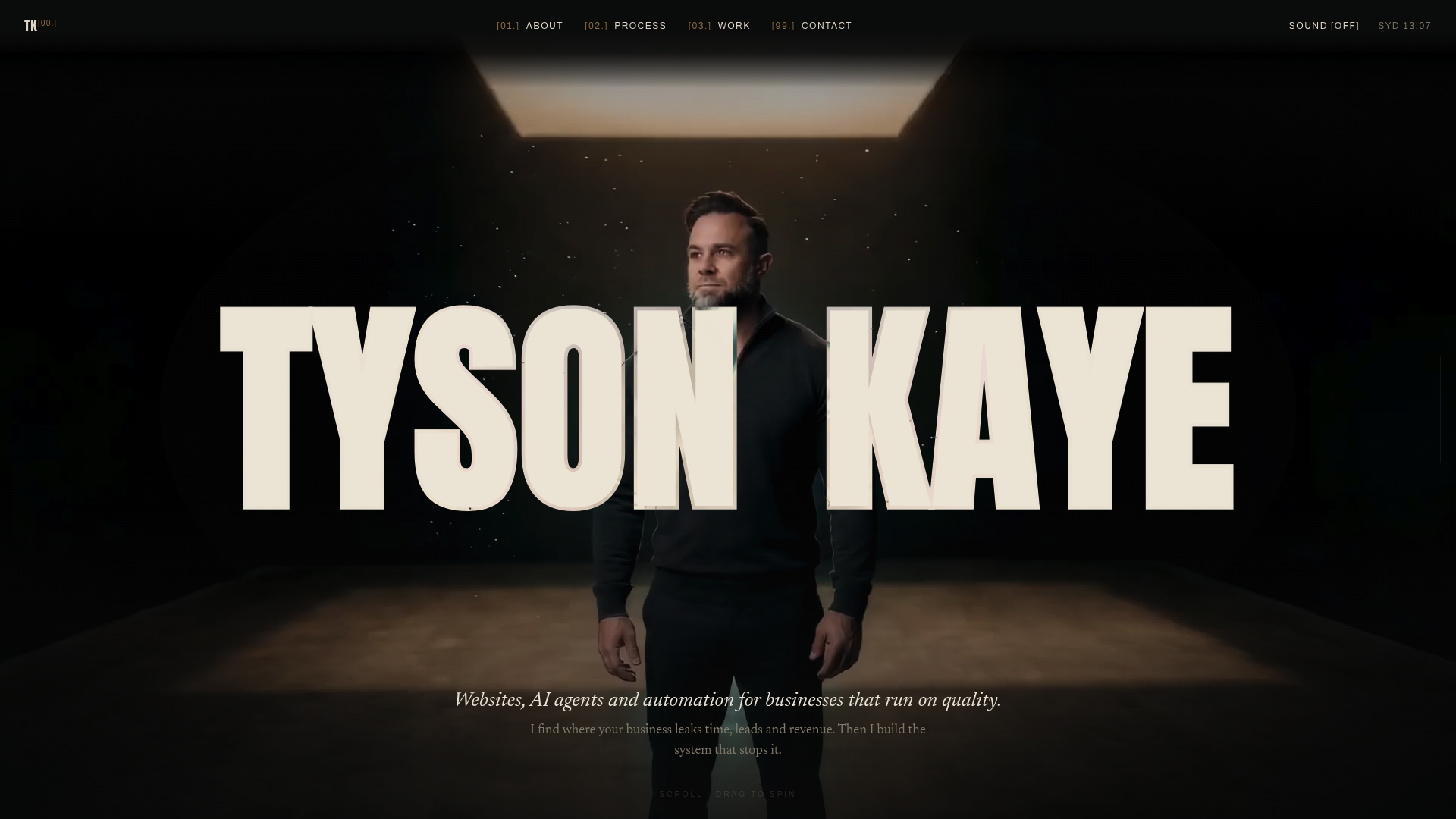
Tysonkaye's marketing materials state clients saved up to 20 hours a week. Those materials also claim 205% growth in organic traffic within 90 days. The operator runs the same systems he builds in his own business. That reduces proofing time and accelerates early optimisation.
Core Features
A structured business system diagnosis highlights operational leaks and prioritises fixes. Custom website design targets high-value branding while integrated CRM stores interaction data and automates follow up. AI agents automate lead capture, bookings and follow-up, and bespoke automation workflows link those agents to your CRM and business processes.
Key Differentiator
Tysonkaye builds and operates the systems himself, proving them in live business operations. That first-hand use forces practical decisions during design rather than idealised features. For owners that want a system that has been used day to day, this practice reduces unknowns at handover.
Pros
Highly tailored solutions match specific business processes and buyer journeys, not generic templates. Documented case studies cover professional services, healthcare, legal, construction and tech, showing applied outcomes and sector experience. Faster implementation timelines are possible because the operator already runs the same systems, which cuts the usual trial and error after launch.
Cons
- Higher upfront investment starting at $5,000, with most projects in the $15,000–$30,000 band.
Who It's For
Owners and operators of established, profitable businesses in professional services, healthcare, legal, financial, construction and technology sectors. Typical client revenue falls around $5M–$50M and the teams want technical work that removes operational friction. This is not aimed at early-stage startups or sole operators without steady revenue.
Unique Value Proposition
Systems are deployed inside Tysonkaye's own operations before client delivery. That in-house proof reduces discovery cycles and reveals integration issues early. For you, that means fewer unknowns during cutover and faster value realisation after launch.
Real World Use Case
A healthcare provider replaced manual intake with automated forms, CRM routing and booking agents and reported a large weekly time saving. That saving freed clinicians for billable work and reduced administrative backlog. The same pattern appeared in a salon that used SEO plus integrated lead management to raise bookings and visibility.
Pricing
Pricing starts at $5,000, with most projects between $15,000–$30,000 and larger builds above that band. The model is project based and scales with complexity, integrations and ongoing optimisation work. Exact scope and fees are determined after diagnosis and scoping.
Website: https://tysonkaye.com.au
Vaaz
At a Glance
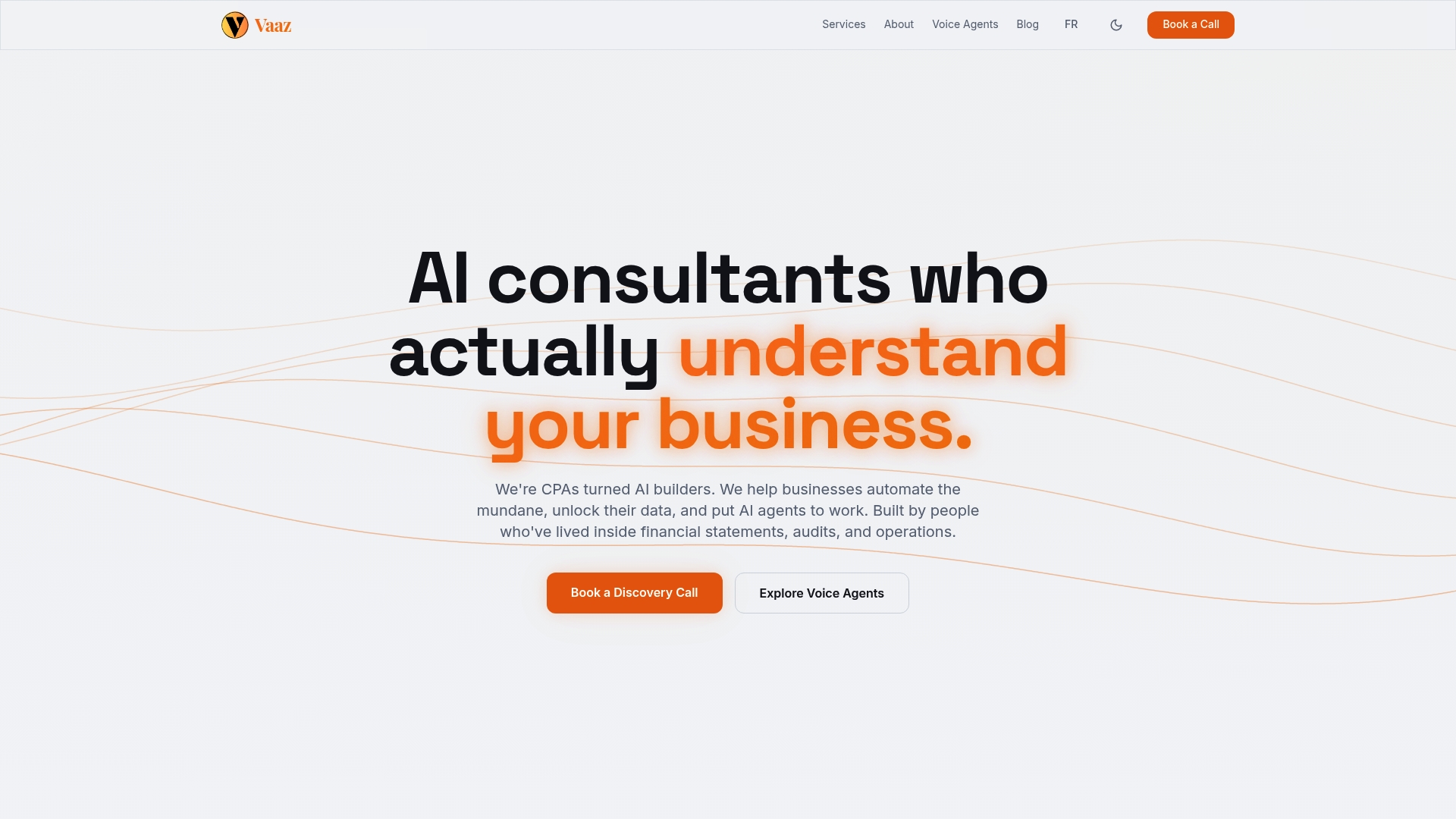
Built by CPAs, Vaaz pairs accounting expertise with Voice AI agents that operate 24/7. The firm targets small and medium businesses with workflow automation, financial dashboards, and accounting automation. The company emphasises compliance, security, and ongoing monitoring for regulated industries.
Core Features
Vaaz delivers AI strategy and implementation that maps to existing business operations, with workflow automation to remove repetitive tasks. The offering includes financial dashboards for CFOs and accounting automation that understands core finance processes. The team also builds custom AI solutions and provides deployment options such as private cloud and on-premise.
Key Differentiator
A finance-first approach sets Vaaz apart. The team’s CPA background helps shape solutions around accounting workflows and reporting needs. That orientation makes their work most relevant to finance teams and businesses that want AI aligned to operational controls rather than a generic chatbot.
Pros
Vaaz combines domain expertise and delivery support from planning to ongoing maintenance, which reduces handoffs and ambiguity during rollout. Their Voice AI agents can handle calls and bookings day and night, lowering missed contacts for service teams. Flexible deployment including private cloud or on-premise options suits regulated sectors that require tighter control over data and audits.
Cons
- Pricing is not published. The website gives limited pricing detail, so you must request a custom quote.
- Tailored solutions add complexity. Implementation timelines may stretch depending on legacy systems and integration needs.
- Public documentation about out-of-the-box features and onboarding steps is sparse, which makes initial vendor comparison harder.
When It May Not Fit
If you need an off-the-shelf voice bot with fixed pricing and rapid, low-effort deployment, Vaaz may not be the right choice. Organisations without internal IT support should budget for vendor-led integration work. Small teams with minimal call volume will likely find the consultancy model expensive for routine tasks.
Who It's For
Vaaz suits small and medium-sized businesses and finance teams that need AI built around accounting and compliance requirements. You will get the most value if your operation handles high call volume or repetitive finance processes. Service providers and regulated organisations will benefit from the emphasis on security and controlled deployments.
Real World Use Case
A regional law firm replaced manual appointment booking with a Voice AI agent that captures basic intake, books slots, and reduces missed calls. Staff regained billable hours previously spent on screening calls. The firm kept client data under its own control by choosing a private deployment.
Pricing
Vaaz does not list public pricing. Engagements appear to start with a consultation and a bespoke proposal. Expect project or retainer pricing that varies by scope, deployment choice, and integration complexity.
Website: https://vaaz.ai
UNO OS
At a Glance
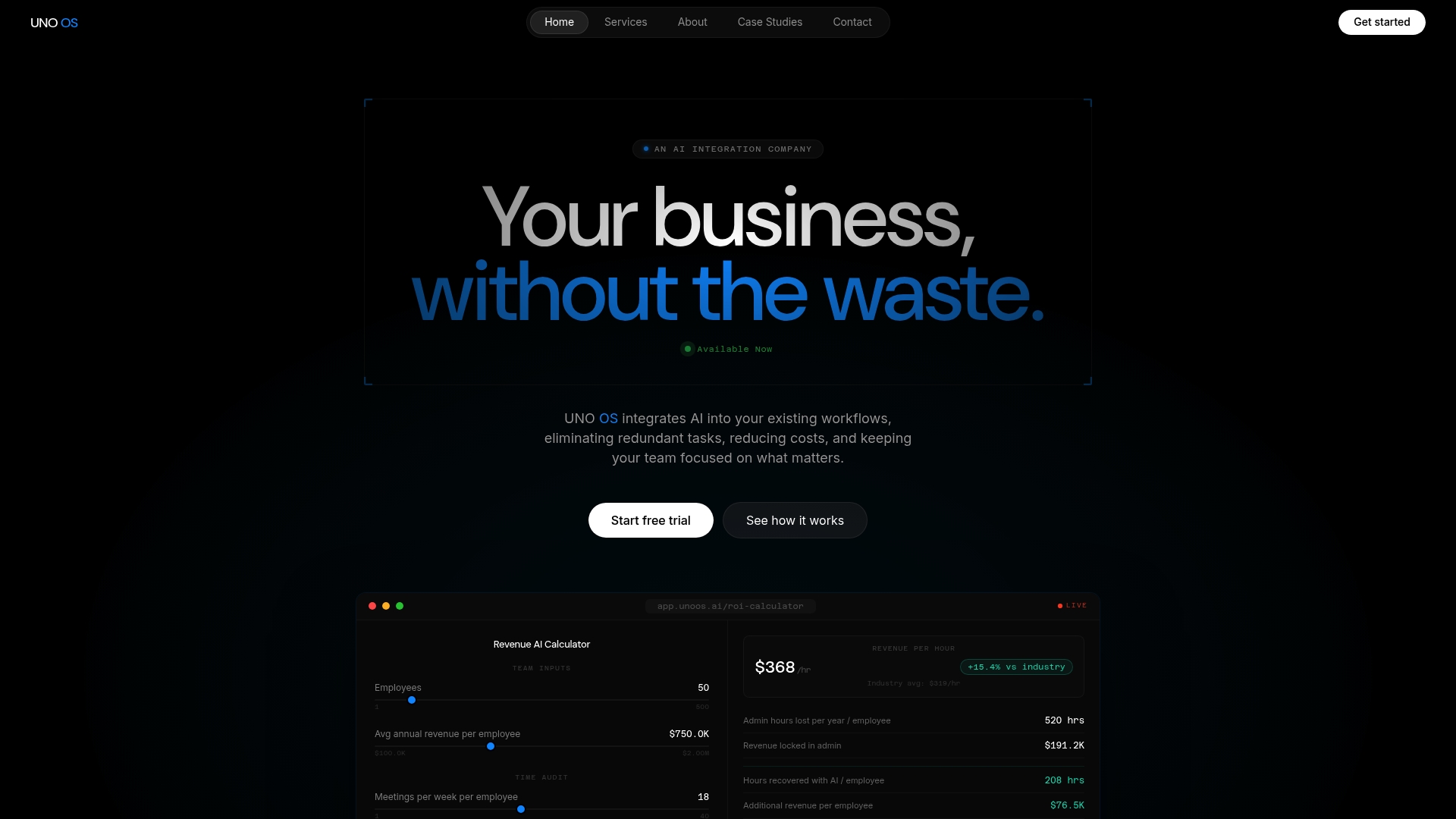
The vendor advertises automation live in 14 days with no disruption to current operations. That claim positions UNO OS as a rapid deployment option for mid market teams. The company also highlights real time dashboards that surface cost savings and bottlenecks.
Core Features
UNO OS runs a workflow audit and maps processes to find repetitive tasks and automation opportunities. Its core engine, the Task Elimination Engine, classifies tasks with AI and deploys automations while keeping your existing tools connected. The Insight Layer feeds live performance dashboards that track savings and surface operational bottlenecks.
Key Differentiator
Rapid deployment with low internal technical demand sets UNO OS apart. The vendor presents the 14 day deployment as a standard offering and pairs that with an emphasis on zero disruption to active workflows.
Pros
The platform reports fast implementation and a focus on minimal interference with daily operations. It claims broad connector coverage, listing 200+ connectors that let it link to common CRMs and service tools. UNO OS also advertises that users need no coding skills to manage automations and that live dashboards provide continuous visibility into cost and task reductions.
Cons
- Trust in third party reviews suggests usability limits for extremely complex workflows.
- Buyers must confirm AI readiness and integration compatibility before rollout.
- Pricing detail and scalability specifics are not publicly listed.
When It May Not Fit
Implementation may change depending on workflow complexity and data readiness. Organisations with highly specialised or non standardised processes could face custom engineering needs. Small teams without a baseline of structured data may see limited early benefit.
Notable Integrations
- Salesforce
- Jobber
- n8n
- GoHighLevel
- Attio
- CompanyCam
- Service Autopilot
Who It's For
UNO OS fits medium sized businesses that want to replace manual work without hiring technical staff. It suits operations, finance, and sales teams that already use mainstream cloud tools and seek faster automation rollout. The solution targets organisations ready to standardise processes and measure savings through dashboards.
Real World Use Case
According to the company, a home services client automated invoicing and cut 40 hours of manual work in two weeks. That example also reports an increase in revenue per employee of $76.5K for that organisation. The case shows how automating data entry and billing flows can free time for field staff and admins.
Pricing
Pricing is not specified publicly. The vendor indicates costs are likely customised to enterprise needs and workflow scope. Prospective buyers should request a tailored quote and scope of work for accurate pricing.
Website: https://unoos.ai
Madewell.ai
At a Glance
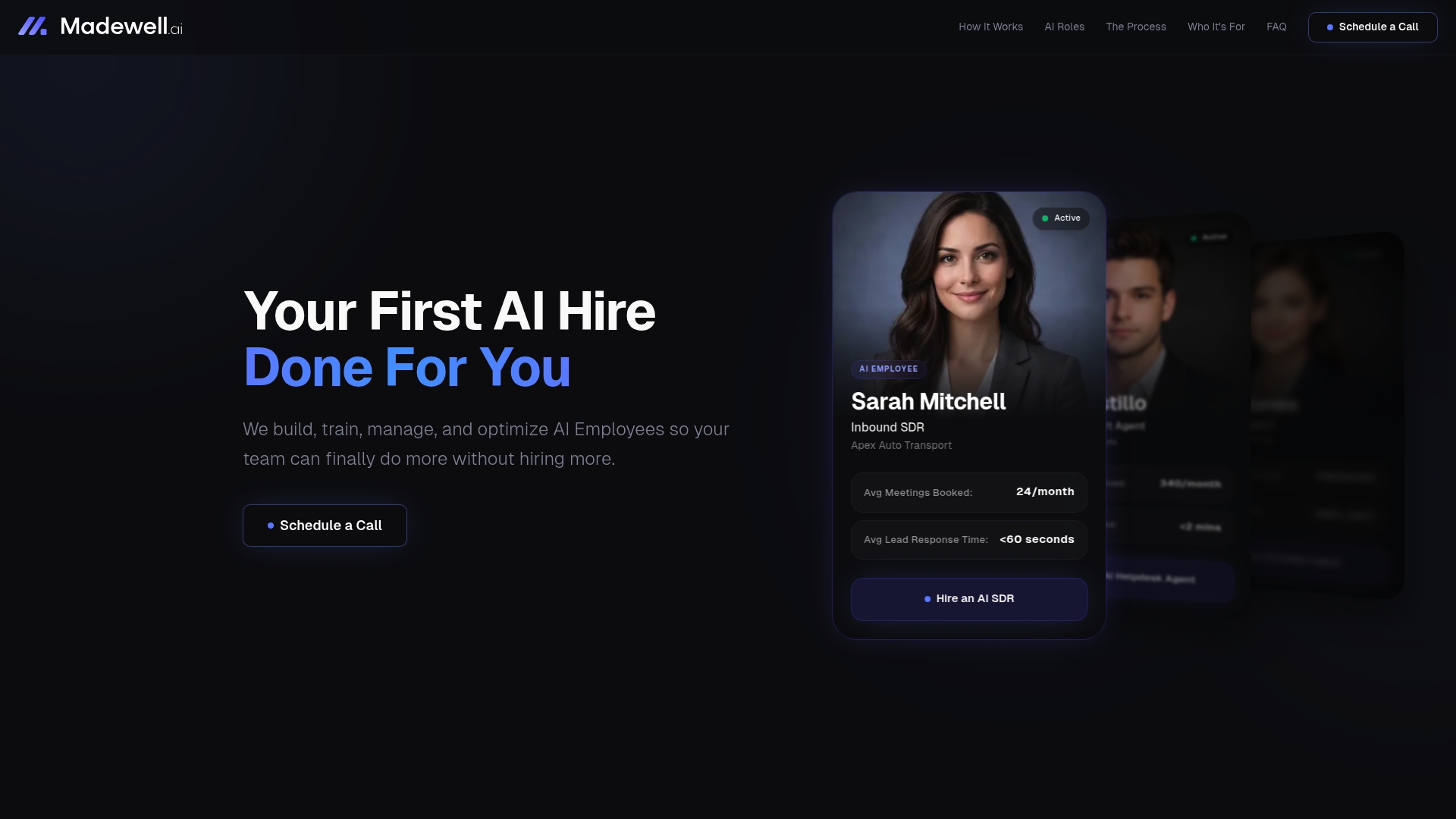
Madewell.ai deploys fully managed, named and voiced AI Employees that act as permanent members of client teams. The company handles build, onboarding, and monthly performance reviews to keep those agents aligned with existing workflows. That model promises 24/7 availability and no staff turnover as vendor-stated benefits.
Core Features
Madewell.ai delivers full service management from build through ongoing optimisation, including personalised names, voices and tool access for each AI Employee. Integrations are configured to sit inside client workflows and the vendor provides performance tracking plus monthly reviews to refine behaviour. Typical automations cover sales qualification, support triage, legal intake and recruiting screens.
Key Differentiator
The standout is end-to-end delivery of customised AI Employees that the vendor manages on behalf of clients. Madewell.ai combines hands-on onboarding with ongoing optimisation so each agent adapts to live workflows. That managed approach differs from toolkits that leave deployment and tuning to in-house teams.
Pros
Fully managed delivery reduces internal project overhead because Madewell.ai handles setup, voice and persona design, and ongoing tuning. The model targets cost savings versus hiring by replacing specific roles with vendor-maintained agents. Continuous optimisation and monthly reviews give visibility into agent performance and allow incremental improvements. Ownership is retained by clients, so teams can audit actions and control access to connected tools.
Cons
- No independent third-party reviews are listed, creating heavier reliance on vendor trust for claims.
- Integration specifics and supported platforms are not detailed, which makes technical fit unclear.
- Complex, highly nuanced human interactions may still require human escalation or oversight.
- Pricing is offered as fixed-fee projects , but public cost figures are not provided.
When It May Not Fit
If your stack needs certified, out-of-the-box connectors to niche platforms, this service may not match requirements. The solution depends on high-quality onboarding data and process design to perform well. Organisations that require transparent, itemised pricing or a self-serve deployment path will find the model restrictive.
Who It's For
Growing mid-sized businesses with overloaded teams that want operational capacity without adding headcount will see the best fit. Teams that prefer handing deployment and tuning to an external partner rather than building internal AI ops will benefit most. Companies that need tight control over integrations should validate technical fit first.
Real World Use Case
A logistics operator deployed an AI Dispatch Agent to coordinate field crews and customer messages. The agent handled routine updates and booking changes while humans focused on exceptions. That shift reduced manual coordination time and sped responses for drivers and customers.
Pricing
Madewell.ai sells work as fixed-fee projects, with costs set per engagement rather than via published tiers. The vendor does not list public prices, so quotes require direct contact and scope definition. Expect project pricing to depend on number of roles, customisation depth and integration effort.
Website: https://madewell.ai
Brainverse
At a Glance
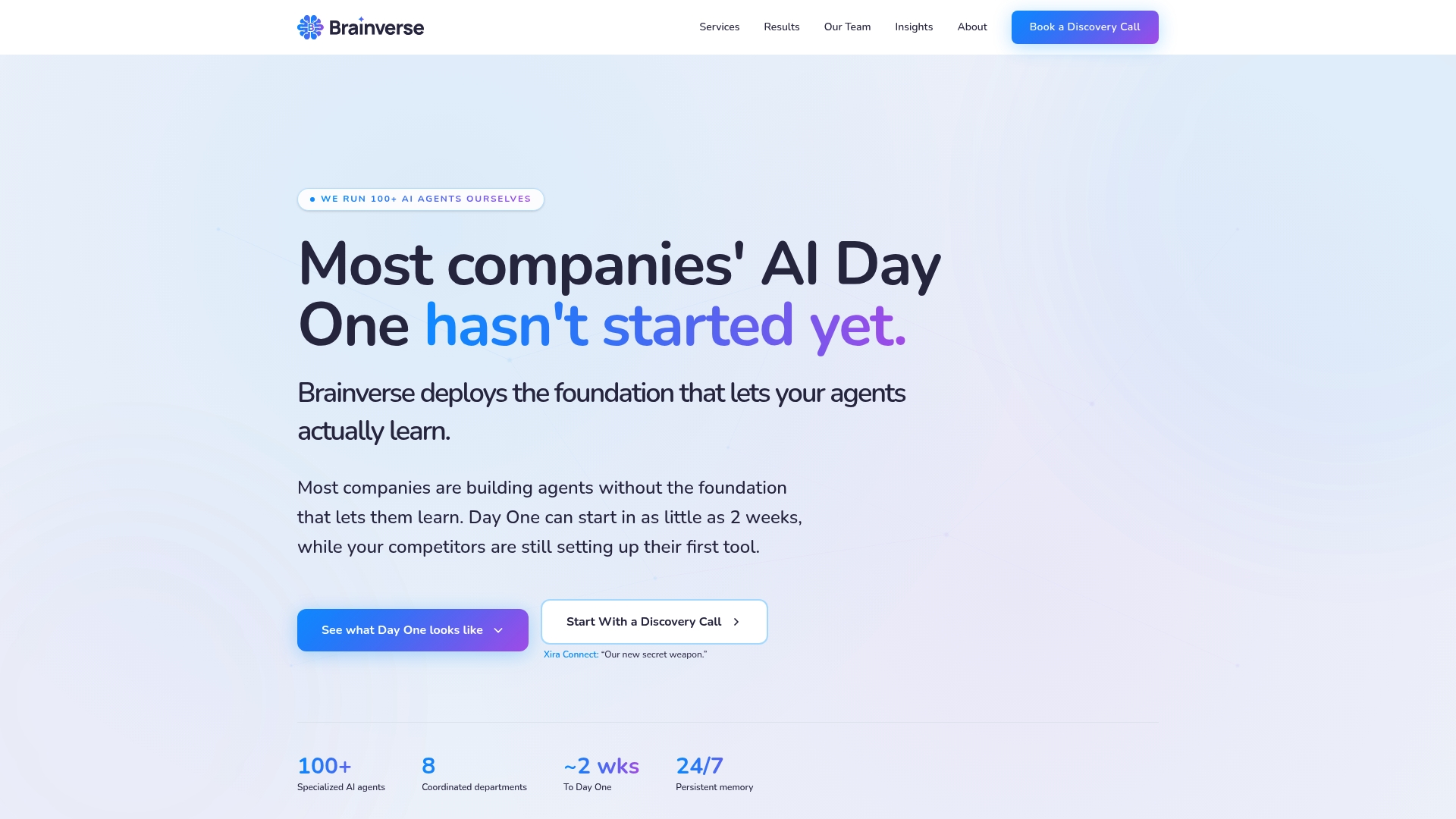
Brainverse reports a client rebuilt a website 99.5% faster, finishing the job in under 24 hours. The platform deploys managed AI agent organisations that keep shared memory and coordinate tasks across functions. Teams can start with a working agent organisation and then tune it through Brainverse Edge and Frontier layers.
Core Features
Brainverse builds custom AI agent teams tailored to your workflows and gives them persistent memory so decisions carry across sessions. It enforces structured cross-agent dispatch and maker-checker quality gates, and it exposes live metrics through the BrainSync dashboard for monitoring performance and throughput. The provider manages deployment and ongoing tuning so your internal engineers do not need to build the orchestration layer.
Key Differentiator
The product ships a fully deployed, managed AI organisation rather than a toolkit or consulting plan. That focus places Brainverse toward mid-to-large organisations that need coordinated, persistent agents working across sales, legal, operations and engineering. Compared with Tysonkaye, Brainverse narrows its offer to an end-to-end managed agent ecosystem with in-built cross-team memory and governance.
Pros
Deploying a ready AI team from day one reduces the time your people spend on orchestration because Brainverse handles integration and agent choreography. The system supports ongoing learning and self-improvement, which means performance can rise without repeated manual retraining. Managed deployment removes the need for internal engineering resource during rollout, and the vendor reports measurable ROI in multiple domains.
Cons
- The vendor says the initial setup typically takes two weeks for Phase 1, which can feel heavyweight for smaller projects.
- Ongoing value requires active management or an Edge retainer to receive continuous updates and tuning.
- Pricing pairs a flat deployment fee with an optional retainer, so total cost may exceed simple subscription tools for small-scale needs.
When It May Not Fit
Brainverse is not the right choice for one-person startups or teams that only want a single, simple automation. Organisations without capacity to engage during the initial deployment will struggle to extract full value. The platform also demands a higher upfront investment than many single-purpose SaaS tools, so small pilots may be more expensive than comparable point solutions.
Who It's For
Mid-to-large organisations seeking a coordinated, ongoing AI-driven operational system will find this approach useful. Buyer teams with cross-functional workflows, recurring operational tasks, and a mandate to reduce manual handoffs will benefit most. Organisations that prefer a managed deployment rather than building an orchestration layer in-house will get the most value.
Real World Use Case
A client case study shows a website rebuild completed in under 24 hours. That figure sits alongside automated legal compliance reviews done from a mobile device and sales call preparation that moved from hours of manual work to automatic readiness. These examples show the platform applied across engineering, legal and sales workflows.
Pricing
Pricing uses a flat fee for initial deployment plus an optional retainer for ongoing updates and tuning. The vendor structures costs around deployment plus continued management, so expect higher upfront spend compared with single-tier SaaS subscriptions.
Website: https://brainverse.ai
Comparison of alternatives
Tysonkaye provides extensive tailored solutions proven in live business applications, contrasting with competitors focusing on quick deployments or specialised domains. The decision ultimately rests on balancing integration depth against initial time and cost considerations.
Deployment Speed
UNO OS claims the fastest implementation among the compared offerings, advertising automation deployment within 14 days without disrupting current operations. This strength appeals to teams prioritising immediate improvements and process standardisation over customisation depth. Conversely, Tysonkaye prioritises tailored integrations, requiring longer upfront investment but yielding solutions better suited for unique operational demands.
Domain-Specific Applications
Vaaz incorporates accounting expertise into its AI systems, uniquely supporting financial teams and regulated business sectors. Its Voice AI agents and integration flexibility appeal strongly in settings prioritising compliance and security. Meanwhile, Brainverse's approach to coordinated AI teams with persistent memory across workflows distinguishes it for larger organisations requiring multi-department collaborations. Tyonekaye counterpoints these options with cross-sector adaptability proven through case studies spanning healthcare, legal, and other industries.
Best fit
- Established businesses in sectors like healthcare or construction needing custom systems optimised for operational efficiency will benefit most from Tysonkaye’s offerings.
- Businesses in regulated industries requiring controlled data environments should consider Vaaz for its private or on-premise deployment capacities.
- Teams demanding rapid deployment with minimal disruption should evaluate UNO OS, particularly where structured workflows offer immediate automatable opportunities.
- Organisations seeking multi-domain AI ecosystems managed externally will find Brainverse aptly suited to their needs.
Our pick
Tysonkaye emerges as the choice for established businesses prioritising tailored, cross-domain system integration tested in real-world operations. However, for readers whose immediate needs focus on rapid implementations or narrow, domain-specific advantages, competitors such as UNO OS or Vaaz may offer more relevant solutions based on their prioritised features and tradeoffs.
Here is a detailed comparison table to assist you in evaluating AI automation consulting services based on your key requirements:
| Service | Core Features | Key Differentiator | Best Suited For | Pricing |
|---|---|---|---|---|
| Tysonkaye | Custom workflows, CRM integration, lead automation | Proved in operator’s own business | Profitable businesses $5M–$50M in specific industries | Starting at $5,000 |
| Vaaz | Accounting automation, compliance monitoring, Voice AI agents | Finance-centric approach with CPA expertise | Small and medium businesses needing finance AI solutions | Price not published |
| UNO OS | Task Elimination Engine, 200+ connectors, live performance tracking | Deployment within 14 days with minimal impact | Medium-sized businesses seeking quick workflow automation | Price not published |
| Madewell.ai | Full development, ongoing optimisation, managed AI employees | End-to-end service with external management | Medium-sized businesses wanting team extension through AI | Fixed-fee projects only |
| Brainverse | Agent organisations, governance systems, BrainSync dashboard | Structured coordinated AI operations system | Mid-to-large organisations requiring integrated multi-agent systems | Flat deployment fee plus retainer |
Why Do Customer Service Agencies Need Custom AI Agents?
Customer service teams face high call volumes and operational friction when relying on generic AI tools. Tysonkaye targets these specific pain points by diagnosing business processes and fixing operational leaks with custom AI agents. This approach frees up to 20 hours a week in administrative tasks and has doubled organic traffic for clients in just 90 days. By shaping AI to fit your real workflows, Tysonkaye ensures more booked revenue and less wasted effort.
Interested in saving time and increasing efficiency with AI tailored for customer service agencies?
Explore how Tysonkaye’s proven systems can reduce your operational friction and convert leads into meaningful bookings. Visit Tysonkaye to see how to cut admin time with AI that works the way your business operates.
FAQ
What time savings can I expect with Tysonkaye's service?
Tysonkaye reports that clients save up to 20 hours a week by utilising their systems. This metric highlights how the platform optimises operations and streamlines tasks. Owners looking for efficiency should consider integrating Tysonkaye into their customer service strategy to free up valuable time.
How does Tysonkaye compare to Vaaz in terms of cost?
Vaaz's bespoke solutions offer tailored AI for customer service but do not publish their pricing, which requires a custom quote. Tysonkaye, starting at $5,000, presents a clear pricing structure that allows for informed budgeting. For businesses needing transparency in costs, Tysonkaye may be the better choice.
What is the unique feature of Tysonkaye's systems?
Tysonkaye builds and operates the systems in-house, which means they are proven in live business operations before client delivery. This approach reduces unknowns during the handover, which is crucial for effective customer service management. Companies should consider this unique aspect when evaluating AI options.
Can Tysonkaye improve lead capture and follow-up?
Yes, Tysonkaye's AI agents automate lead capture and follow-up tasks. This feature allows for efficient customer management by ensuring timely responses and bookings. Businesses that require consistent customer engagement should look into implementing Tysonkaye's services.
How does Tysonkaye support businesses transitioning to AI?
Tysonkaye's approach involves documenting and proving systems in their own operations before rolling them out to clients. This method aids in resolving integration issues early, making transitions smoother and more reliable. Companies seeking a structured AI integration should consider Tysonkaye as a viable partner.